03 / Financial reporting
Turn financial statements into useful decisions.
A report should help your board decide what to do next. I connect balances, operating results, cash movement and budget comparisons so volunteers can ask better questions and discuss spending with context.
Work directly with Keith Knight · Professional accounting for self-managed HOAs

Does this sound familiar?
When volunteer time meets accounting complexity.
Financial reports should answer the board’s questions: What do we have? How are we doing against the budget? What needs attention? I prepare reporting that connects account balances, operating results and cash movement, with explanations of material changes rather than leaving volunteers to interpret every line on their own.
- 01
Meeting packets contain numbers but little explanation of what changed.
- 02
A positive operating result is mistaken for cash available to spend.
- 03
Budget variances grow without a clear reason or agreed follow-up.
How I can help your HOA
A practical plan, with clear responsibilities.
- 1
Agree on the reporting package
Choose the statements, comparison periods and delivery schedule that support your meetings.
- 2
Explain meaningful changes
Highlight material variances, unusual activity and items requiring board clarification.
- 3
Connect reports to decisions
Present the accounting position alongside the questions and follow-up items that matter now.
An illustrative situation
From a familiar problem to a clearer next step.
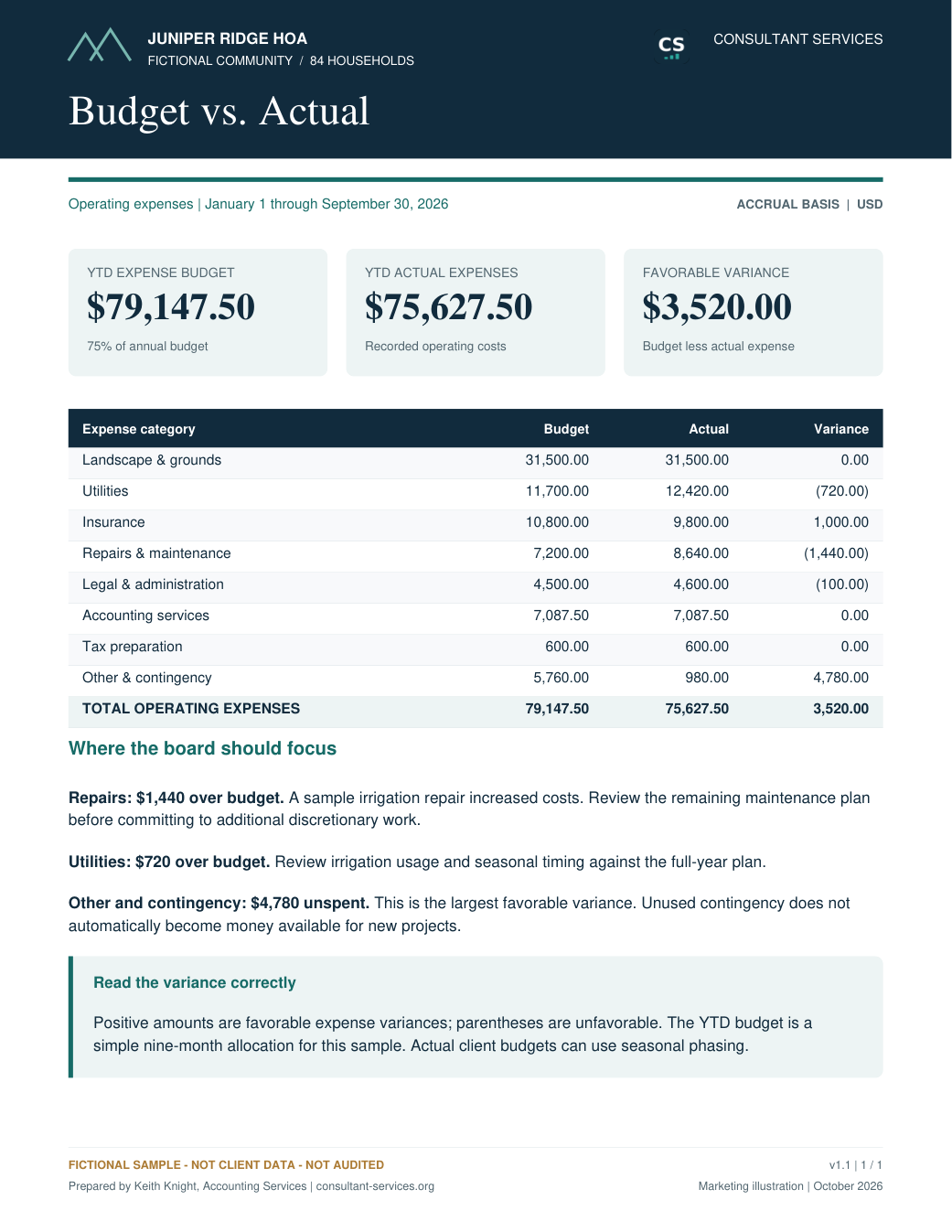
A landscape expense is over budget while year-to-date results remain favorable. I separate that specific variance from the overall result, explain the cash position and identify the question the board needs to resolve. The discussion becomes more focused than simply asking whether the HOA is “doing well.”
What the work can include
Support your board can put to use.
- Balance Sheet, income and expense reporting, and cash-flow information as agreed.
- Current-period and year-to-date comparisons.
- Budget variances and context for significant income or expense changes.
Bring the questions. We’ll agree on the records.
For the first conversation, it helps to know what is available:
- The current budget and recent reports.
- Your board’s meeting schedule and recurring financial questions.
- Known spending decisions or upcoming cash needs.
Start with a description of your situation. Please keep confidential homeowner and banking records out of the public consultation form; secure access can be arranged later.

Your point of contact
Let’s talk about what would help your board.
Too much for volunteers.Too small for full management.
Request a consultationEmail Keith